
I will be revealing the cover for “Vintage Dreams” EXCLUSIVELY in my newsletter soon. Sign up HERE and see it first!
I will be revealing the cover for “Vintage Dreams” EXCLUSIVELY in my newsletter soon. Sign up HERE and see it first!

November’s almost here, and personally I’m all but vibrating with excitement. November! November! November! It’s time to sharpen those pencils, check that USB drive, and get those notes ready. Stocked up on coffee and easy-made dinners? Cleared the calendar for everything not super important? Informed your friends that you’re unavailable until December? Then you’re just about ready to start that novel of yours just itching to get out. Though, really all you need is what’s pictured above. Arrange them in different ways, and you might end up with a book. Not so hard, right?
50,000 words in thirty days sounds a bit daunting at first. Like starting a novel any other time of the year. But then you write the first word, the first paragraph, the first page. And suddenly you have a chapter. Two. Three. Half a book. And then it’s December and you have a — or most of one — rough draft of what might become a real book one day after lots of editing and polishing. And writing blurbs, researching publishers, submitting…waiting! Then, if it’s accepted, there’s the editing, the marketing, the…yep, the waiting. So really, when it comes down to it, the next thirty days will be the easy part of your book adventure. Don’t forget to enjoy it.
I first participated in NaNoWriMo in 2011. The result was what became my first novel, A Thousand Sunsets. In 2012, the result was something that ended up in the desk drawer for a while until I edited into a short story that got published under a pen name. Then the timing was wrong for a few years, but this year I’m ready to kick NaNoWriMo butt again. I’m starting something completely new, something that will hopeful become a series of four books featuring four brothers and their romantic adventures. I’m super excited about it.
I guess this wouldn’t be much of a pep talk if I didn’t offer some tips. You get two. First, you need to figure out how YOU will write 50,000 words in thirty days. If you’ll stick to 1667 words a day, write whatever number you feel like on any given day and hope it all adds up in the end, or some complicated schedule of more words on the weekends than during the week. It doesn’t really matter how you do it, just as long as it works for YOU. Much like writing. We all have our rituals, our way of doing things. Being under a strict deadline is no different. Find your own way.
The second tip is one you’ve probably heard a lot. Don’t spend time looking back and editing. Just write. You can edit in December. The 50,000 words don’t have to be perfect, they just have to be written. Like first drafts in general. So full steam ahead is the way to go.
Tips: Don’t edit. Full steam ahead.
I wish you the best of luck. I have no doubt that a writer who sets his or her mind to meeting a deadline will make it. Willpower is an essential part of doing what we do. And if, for some reason, you don’t finish, then you’ll come back and finish next year because you’re no quitter. It’s how we writers roll.
For the rest of the world, be nice to us this coming month. Please. Even better, bring us a cup of coffee or a meal. We’re busy now, but we promise to make it up to you next month.

Any real writer should have a drawer or an e-mail folder full of them. Rejections. The dreaded and unavoidable evil for all writers. They crush hope and dreams, they hurt, and they are your self confidence’s worst enemy. Whether it’s a standard letter full of useless but polite phrases or a personal note from an editor, who took time to point out what he or she did and didn’t like, it sucks to open a letter or e-mail that says you’re not good enough. Because it’s personal. You pour your heart and soul into your work, and then someone just says “no thanks. Next”. It blows. No question about it.
But. And there is a big but. If you hope to make it in the writing business, then rejections are part of the game. You need to take whatever criticism the rejecting editors (hopefully!) give you and learn from it. Use it to move on. Mope for a few hours or a day at the most, and then let it be a kick in the ass so you work even harder. Sometimes it’s not just a cliché to say “what doesn’t kill you makes you stronger”. In writing it’s true. If you don’t let the rejections get you down, they will make you stronger. They are valuable experience.
Besides, a drawer or folder full of rejections proves that you’ve tried. That you’re not one of those people who dream about writing a book but never get off their ass and actually do it. Rejections mean that you’re out there chasing your dream and that you believe in yourself even when random editors and publishers don’t. And that’s what you need to succeed, because if you don’t believe in your work, no one else ever will.
One day, when it’s not a rejection in the mail, that coveted acceptance letter will mean so much more to you because it’s really something you’ve fought for. We’ve all heard of the bestselling authors who submitted their work to a legion of publishers before finding the right home for a novel that went on to do extremely well.
Personally, I treasure my rejection letters. Not right when I receive them, but after a while they become symbols of a strength and a confidence I never thought I had. They become battle scars, they become invaluable experience, and they are what makes me celebrate acceptance letters even fiercer than I would if I hadn’t tasted rejection. I don’t wish for rejection letters, but I don’t let them stop me either.
And remember – battle scars are sexy.

I always believe in my favorite soccer team. Even when they’ve done nothing but lose for three months, have an injury list about a mile long, and are facing the defending champions, I always think they’ll win when the game starts. God, however, I’m not so sure I believe in. At least not the God mentioned in the world’s first bestseller, the Bible. One thing I’m certain I don’t believe in, though, is writer’s block. God may or may not exist, but writer’s block definitely doesn’t.
“There’s no such thing as writer’s block. That was invented by people in California who couldn’t write.”
― Terry Pratchett
If it was really invented by people in California, I have no idea. But I’m sure it was, indeed, invented by people who were better at making excuses than they were at writing. Writer’s block is nothing but an excuse. Because of the misconception that writing isn’t hard work, those who don’t put in the effort need an excuse to why they’re not producing words.
Sure, sometimes your writing won’t flow. But blocked? Nah. More like stuck in a corner you’ve written yourself into. Delete. Maybe you’re distracted. Focus or go do whatever’s pulling at you more than writing is. If it just feels wrong (and in my experience, sometimes it does), then it’s entirely possible that you haven’t done your research, don’t know exactly what it is you’re trying to say or in which direction to take your story. That doesn’t mean you’re blocked. That just mean you haven’t done your job.
There’s always a reason why you think you’re blocked. Analyze why – is the scene going in the right direction? Are your characters behaving as they should? Is the dialogue unnatural or stilted? Find out what the following scene will be and use it as a guiding light to get through the one giving you a problem. You’re not blocked – if anything, you’re lost. So get unlost by taking control of what you’re writing. It’s your damn story. Writing is hard work, but it’s not rocket science. Well, unless you’re writing about rocket science. And odds are that you’re not.
By using the term writer’s block, all you’re really doing is making things harder for yourself. You hide behind an excuse instead of finding out what you’re doing wrong. Saying “I have writer’s block” may fly with some people. All I hear is “I’m not invested enough in my story to put in the effort required to find out what I’m doing wrong.”
My own solution was to get “no excuses” tattooed on my wrist and always do my best to live up to it. Whether you do the same or maybe something less drastic is up to you, but don’t think you sound like a writer if you tell people you have writer’s block. You sound more like a blockhead.

Every time the calendar and the weather tell me there’s a new season coming, I think that we’re about to start the best season for reading. It never fails. And I’m always right.
Summer is perfect for reading. Stretched out in the sun with a glass of something cold within reach, taking advantage of the long, light summer nights where you (in my part of the world anyway) can stay in the hammock and read outside until eleven p.m. without straining your eyes. Perfect.
Fall, with the sound of the rain on the roof and the first candles of the season being lit, is ideal for reading. You dig out the blankets, make yourself a nice little reading cave, and inhale as many books as possible. Hot tea inside, stormy weather outside – grab a book, and you’ve got all the ingredients for a wonderful afternoon.
Winter. You’re snowed in, and it’s so cold that you need to wear extra layers of clothes. Outside, the sun only makes a brief appearance every day, and it’s not like you can go out and play football or tend the garden. What are you supposed to do with your time? Read. Just think of all the Christmas books, heart-warming tales perfect for this time of year.
Spring. New starts. The first real days of spring when you can take off your jacket and sit on the porch steps with a book while the sun does something about your pale arms and face. The birds are chirping, and what a lovely sound that is after a long winter. Do you need any other soundtrack to go along with your favorite book?
See? There is no season less than perfect for reading. So what are you waiting for?
I recently finished the second draft of the final novel in my Morello Cove series, and as I let that stew for a while before tackling the third draft, I get to do one of my favorite things as a writer — create a new universe.
Using only pen and paper (I’m old-fashioned when I plot), I will create a universe, decorate it, populate it, and become its supreme ruler. Well, as much as my characters will let me later on when I start writing. But for now, it’s my playground, and I get to build houses, decide eye colors, and what kinds of personalities I stuff my characters with. In my own little, fictional universe, I am God.
I wonder, is there any part of the writing process that’s more fun?
I’ll let you know what my universe ends up looking like and if there’s intelligent life (or just water) on any of its planets. The charming part is that I don’t even know myself yet.
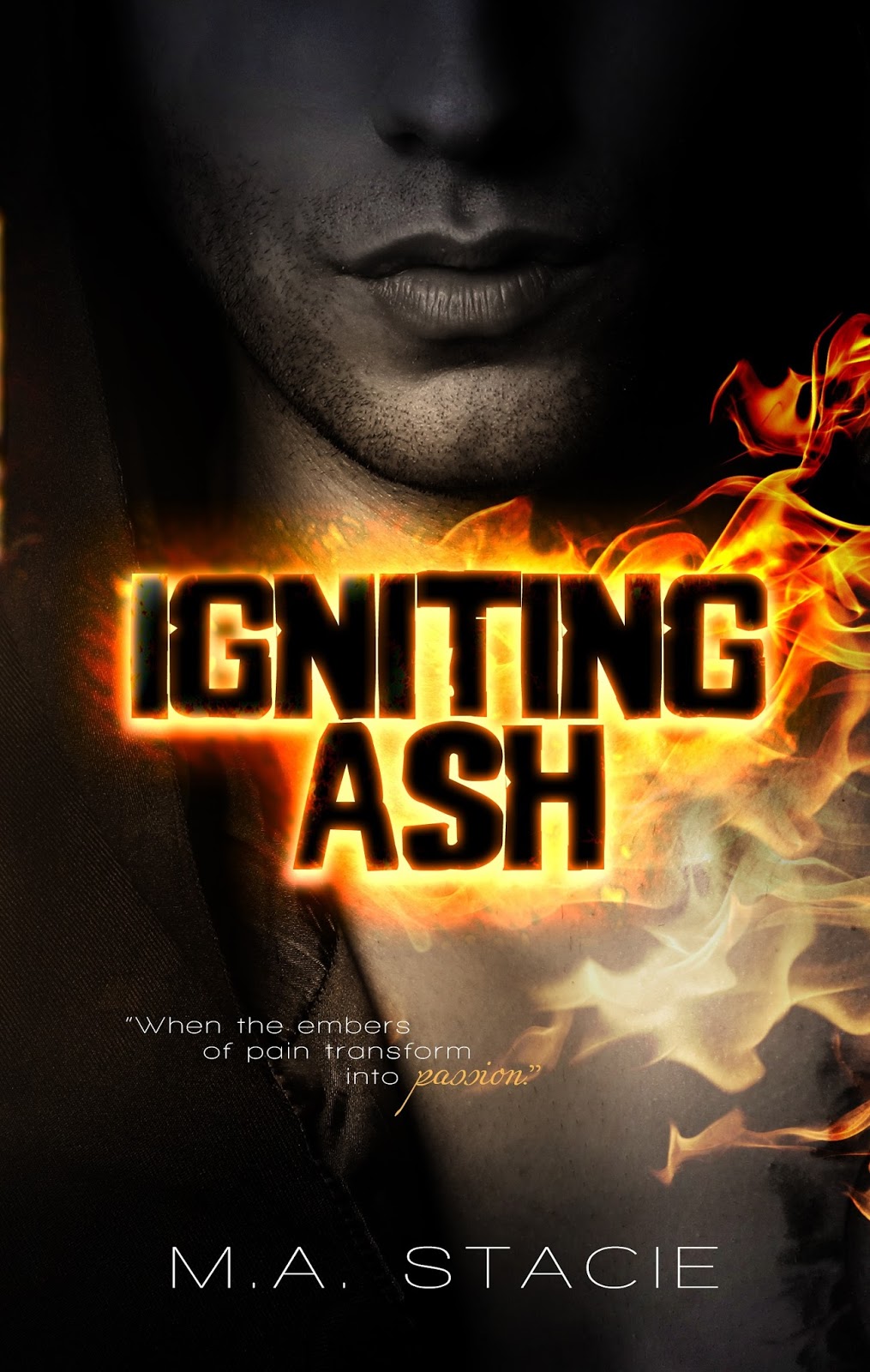
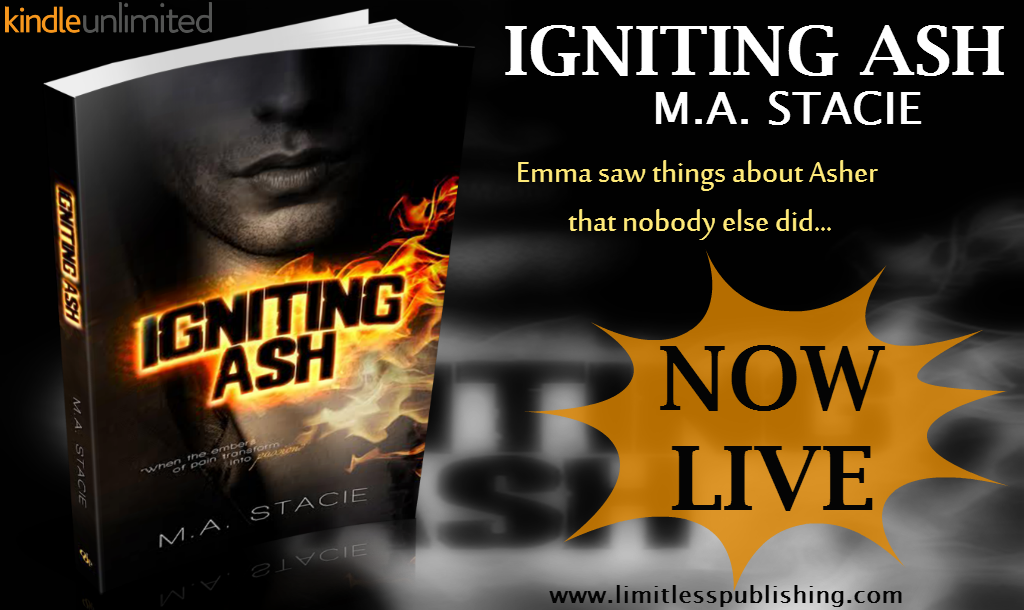
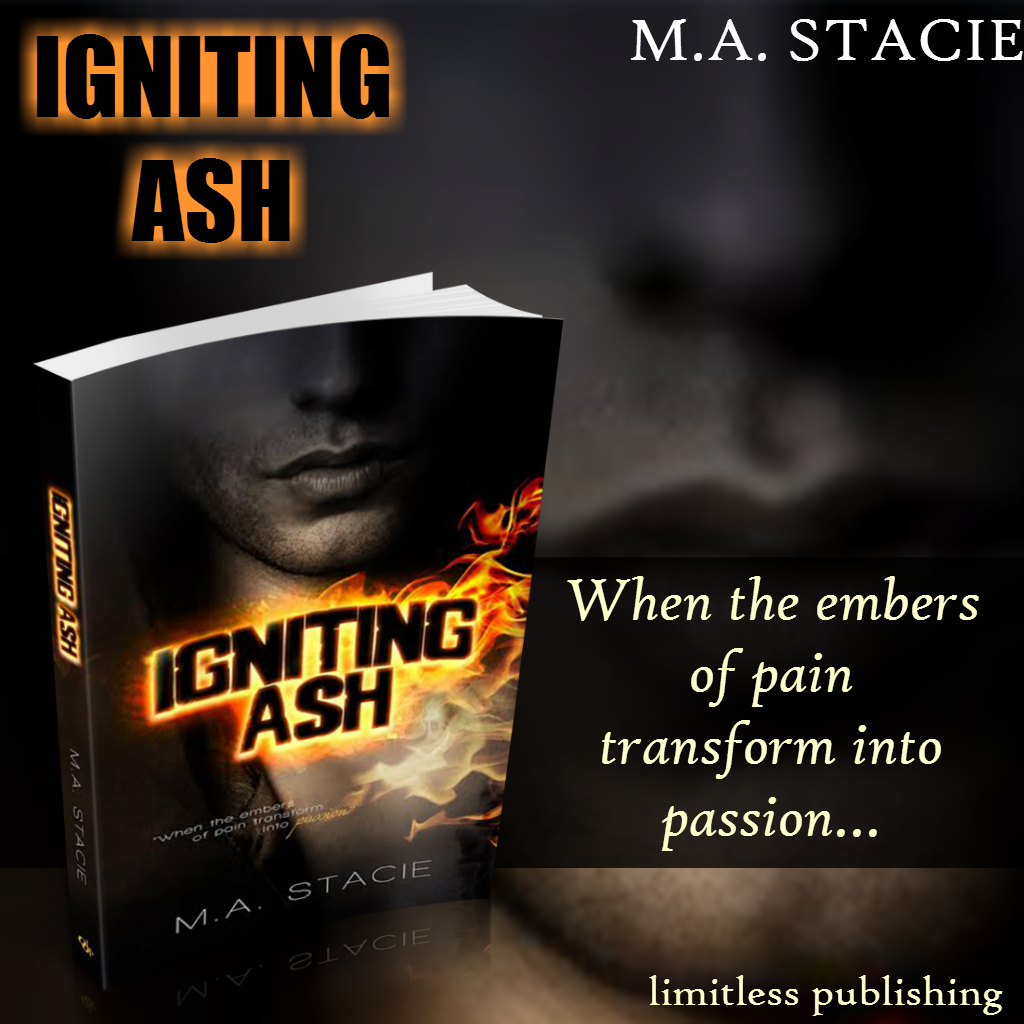
Have you guys picked up your copy of M.A. Stacie’s “IGNITING ASH” yet? It’s fabulous, trust me. Here’s an excerpt and all the info. Read it. It’s the best tip you’ll get this week. No, all month.
She squealed when he grasped her waist and picked her up. His actions came as a shock, his strength too. Her protest hovered on the tip of her tongue, though she never actually said anything. His serious expression and determined strides were enough to keep her mouth closed.
Until he crushed his lips to hers. At that point she knew where it was heading, understood what he meant when he’d shouted. He was sick of holding back. Asher was taking what he wanted and ignoring any possible consequences.
Emma clung to him, their kisses growing deeper and more forceful as he carried her to his bedroom. She kept hold of him as he sat on the edge of his bed, moving her so that she straddled his lap. They’d been here before, only this time the air was electrified, sparks bursting from their touches. He wasn’t going to deny them this time. She could sense from his heated kisses and desperate touches that he was all in.
She blinked, her head spinning when he grabbed her loose T-shirt and pulled it over her head.
He tossed it, not caring to look where it landed. Asher drank her in, his chocolate eyes melting as they perused her chest.
A fire ignited low in her belly, her blood burning through her veins. She’d experienced lust before, however this with Asher was laced with something else. Something deeper.
Slowly, too slowly, he stroked a single finger over the swell of her breast. Her nipples tightened as she silently begged for him to cup them. Her will was enough, because those amazing fingers dipped under the lace of her bra before palming her breast. His eyes never left hers. His touch grew firmer, more demanding. “More,” she whispered. “Asher, more.”
He kissed her long and hard. At the same time she began unbuttoning his shirt, her fingers fumbling so much Asher ended up finishing the job for her. He didn’t stop with his shirt. After rolling her onto his bed, he stood and shucked off his jeans, sliding them down his legs before kicking them across the room. “No more barriers,” he rasped and pulled his underwear off too. His scars were exposed to her, the skin pink and puckered near his navel. There really were no barriers.
Still expecting him to back out, Emma held a bit of herself back. The rejection would sting a little less if she did. However, that became difficult when he hovered over her, pressing his body against hers. His eyes were hooded, and she could feel the heavy thump of his heart when she touched his chest. Hers was as rapid, the thrill of possibility surging in every cell. The connection with Asher was strong, very strong, and much more consuming than anything she’d ever felt before.


I didn’t always know I wanted to write books. I’ve always loved books, though, and I’ve always wanted to write, so it seemed like an obvious match. And once the match was made, I fell in love. The forever kind.
The obvious thing to do would have been to write a book in my native language, Danish. Before I got that far, however, and started wasting my time, I took a look at the market. It was, and is, full of murder mysteries and celebrities with the urge to tell their life stories. I’ve never been much of a fan of either genre, so there was no allure in plotting (fictive, mind you) murder and inventing yet another burned out police detective to solve the crime.
In Denmark, romance authors such as Nora Roberts (my go-to pusher for a feel-good romance on a rainy afternoon) have no place in bookstores. Nope. You get your romance fix at the gas station along with the glossy magazines and the politically incorrect packet of smokes. And that was the genre I wanted to dive into as a writer.
Guess how many Danish publishers seek manuscripts for books to sell at the gas station?
I couldn’t find any either.
An editor at one of the major Danish publishers said a few years ago that to be published in Denmark, you either have to write murder mysteries or be famous. It made me want to move to another country.
So what was a Danish romance writer in the making to do?
First I dabbled a little in short stories. Danish ones for old-fashioned Christmas anthologies, which have a long and proud tradition here, but are dying out. Then I tried my hand at a children’s book with a bit of a mystery touch. Neither was satisfactory because I wanted to be writing something else. So I finally thought “what the hell” and dived into the deep end. I’d write myself a novel, and I’d write it in English so I at least had the option of submitting it to a publisher who wouldn’t just laugh in my face and tell me I’d wasted my time.
To my luck, I’d been writing in English before. If I hadn’t, the project might have seemed too enormous. English is my second language, but apart from a short stint in Ireland, I’ve never lived it. It’s been a class at school, a TV show, a book. Even now, almost six books later, switching back and forth between languages can trip me up.
The rest is history, though. Three published novels, writing my sixth at the moment. The scenic route has had its share of hills and valleys, a roadblock here and there, and some of the most beautiful landscape I’ve ever seen. It’s not always as easy as writing a book in your own language and submitting it to the first publisher you think of. Sometimes it’s forcing hurdles, having to get creative, and believing in yourself even when no one else does. (Just imagine how may people have shaken their heads at me over the years.) But—and it’s a big but—I’ll swear to my dying day that the harder the road you have to travel is, the more you’ll enjoy the destination. Like my grandma always said—no one ever said it was going to be easy. She didn’t say that it would be worth it, but I’ll add that for her.
Taking the scenic route is always worth it.
And that, folks, answers the question of why I write in English. So stop asking me.
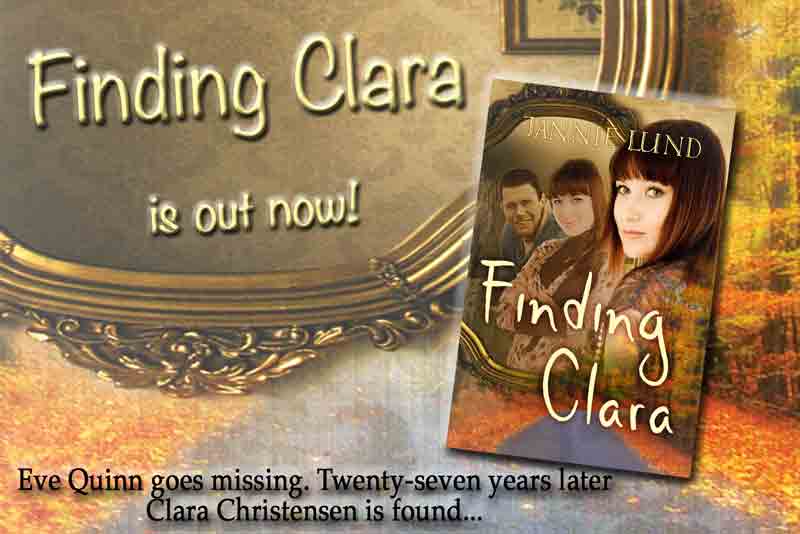
Today’s the day. FINDING CLARA is finally here!
It’s been quite a journey coming this far. I estimate the story first started to take form in my head about ten years ago, and after that I reshaped it over and over for several years until I wrote the first word. I’m quite pleased with the outcome, and I sincerely hope that you will read and enjoy it.
Eve Quinn goes missing. Twenty-seven years later Clara Christensen is found. On her quest to find out who she is and where she comes from, Clara finds a new family and an old love. Trying to combine Clara and Eve, as well as living up to everyone’s expectations of who she should be is difficult. The new family doesn’t help. But the old love does.
Duncan Cantwell has never been able to forget the woman who stole his heart, but he never expected her to stroll back into his life as the long lost daughter of the family who gave him a home when he was a boy.
In the most unexpected way, Clara and Duncan find each other again. They are not just lovers torn apart by circumstance, however. They are in the middle of a family struggling to come to terms with reality. Love has a hard time flourishing, but Clara and Duncan have beaten the odds before.

Buy it here: Amazon.com — Amazon.co.uk — Barnes & Noble — Smashwords It’s available digitally and in print.
Don’t forget to add it on Goodreads. And if you enjoy the book, please leave a review. I’d love to know what you think. Thanks!

 A World of Words